



























Repair · Las Vegas Valley
Pool Equipment Trouble? Las Vegas Repair Guide
Understand pump, heater, filter, lighting, automation and leak diagnostics before approving repairs or replacement equipment.
In this guide
THE TAKEAWAY
Describe the specific pump, heater, light or control problem. Ask how the repair will be checked as part of the connected pool system.
Which component changed its behavior?
Describe the symptom and equipment involved: pump not starting, low flow, unusual noise, a heater fault, filter-pressure change, lights failing, automation errors or unexplained water loss. Share model labels and fault messages without opening equipment. Say whether the problem began after service, a setting change or another repair.
Keep swimmers out if there is an electrical concern, damaged safety equipment or another hazard. Ask whether the service company diagnoses the specific brand and component before booking.
Compare your options
| Option | When to discuss it | What to clarify |
|---|---|---|
| Repair a component | A defined fault can be corrected with suitable parts. | Request the diagnosis, part details and operating test. |
| Replace equipment | Condition, parts availability or a planned upgrade supports replacement. | Ask how the new unit matches the existing plumbing and controls. |
| Investigate a system interaction | Flow, controls, plumbing or water loss may involve several components. | Require a diagnosis that explains the relationship before changing parts. |
ILLUSTRATIVE HOMEOWNER SCENARIO
The pool pump gets noisier
A pool owner notices a new equipment noise and starts comparing replacement pumps online. Before buying equipment, provide the service company with the existing model, the symptom, and any recent service history. Ask for diagnosis of the equipment and related operating conditions.
Request separate repair and replacement options where practical. Compare compatibility with the existing plumbing and controls, installation work, startup settings, and the final operating check. Ask which parts and labor are covered if a warranty applies.
The useful comparison: Compare the complete working solution, not just a pump's advertised price.
Diagnosis, replacement parts and programming
Ask the technician to identify the cause and the conditions under which it occurs. A pump, heater, filter and controller work as part of a system, so ask what related checks are needed. The scope should include compatible equipment or parts, plumbing or electrical coordination, programming and verification.
For a suspected leak, specify detection separately from repair and surface restoration. Do not treat higher pump output as a generic solution to poor flow; request a system assessment.
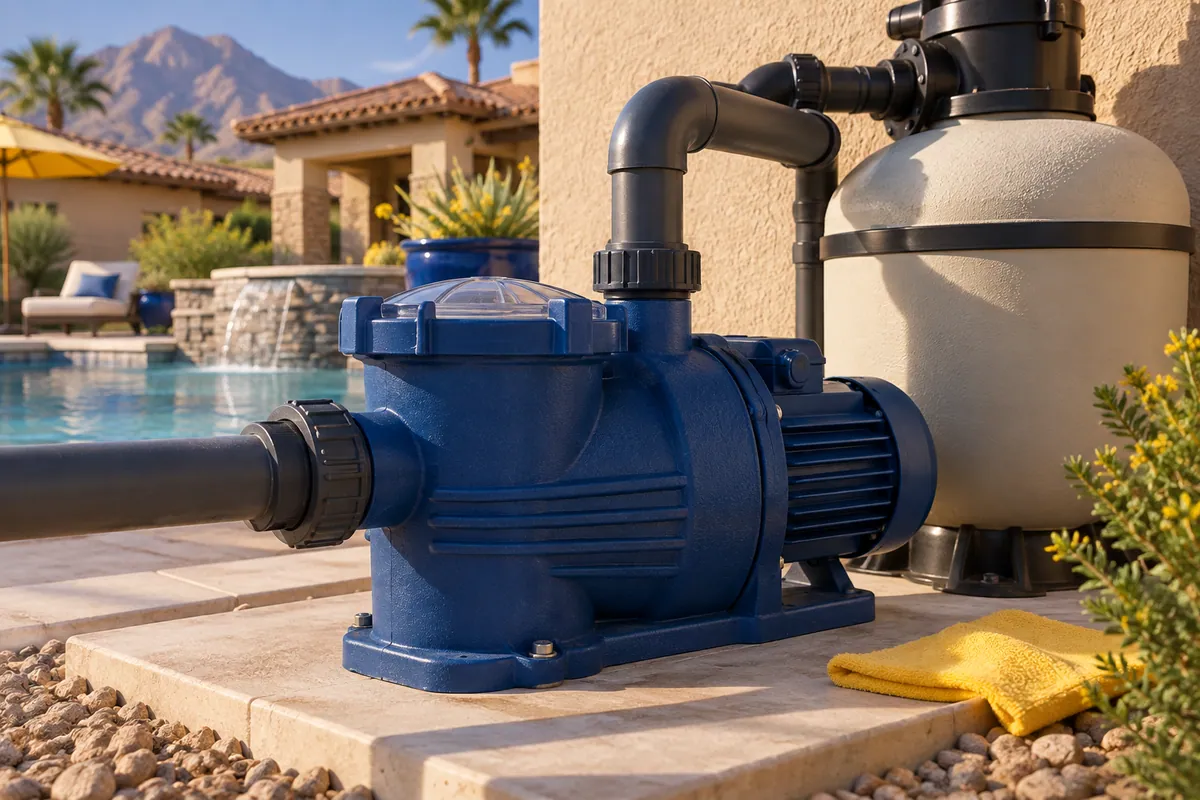
A CLOSER LOOK
Ask what the new pump setting is meant to achieve
A replacement pump should come with an explanation of its programmed operation and how it works with the filter, heater and any water features. More flow is not a universal remedy.
If water loss triggered the visit, keep leak detection separate from an equipment sales proposal until the cause is explained. Ask who verifies the original symptom after repair and what readings or observations you should keep if it returns.
EPA includes proper pool operation and leak attention in its water-efficiency guidance. [3]
What affects the price
Parts, equipment access, electrical work, plumbing changes and diagnostic time influence price. Ask whether warranty coverage pays for the component while leaving labor or travel charges. Compare a repair with replacement using the full installation and control-integration cost.
If a new variable-speed pump or automation system is proposed, request the intended settings and what ongoing support is included. Keep optional upgrades separate from restoring safe normal operation.
Questions to ask before approving work
- What caused the equipment fault?
- Does the replacement match the existing system and controls?
- What warranty labor remains chargeable?
- Will you document settings and verify operation after repair?
After the visit: checks, records and upkeep
Have the technician demonstrate the repaired function and document settings, readings and remaining concerns. Save old and new model information when equipment changes. Give routine service providers the new instructions.
Do not open a pressurized filter or work on energized pool equipment; ask a qualified professional to follow the manufacturer’s procedure. If the same fault returns, record conditions and error messages and use the repair warranty contact.
Common questions
Can a pool service company repair all electrical equipment?
Ask about the company’s qualifications and the scope it performs. Some work may require coordination with a qualified electrician.
Does a noisy pump always need complete replacement?
Not automatically. Ask for the actual diagnosis and a comparison of practical repair and replacement options.
Find local pool & spa companies
Compare the full company selection, then confirm the exact work and your address directly. Specific services and workmanship are not verified by broader project records.
Compare companies for pool & spa equipment repairService context
PoolServ lists heating and filtration equipment service alongside surface and leak repairs. [1]
Pentair’s safety information recommends professional filter maintenance and explains the hazard from trapped air and pressure. [2]
The questions and comparisons are Hey Neighbor’s homeowner guidance. Company pages describe advertised services, not an endorsement or proof of results. Equipment instructions and a property-specific assessment govern the actual work.
Sources & further reading
- PoolServ Las Vegas. Residential Pool Repair. Accessed .
- Pentair. Pool Filter Product Safety and Help Center. Accessed .
- U.S. Environmental Protection Agency. Pool Water Efficiency. Accessed .
About this guide
Written and maintained by Hey Neighbor. Updated .
Editorial update: clarified the main decision, added topic-specific context and checked the reference supporting the added context.
How this guide is put together
These are AI-assisted editorial guides for homeowners, built around published sources and practical questions to ask. This update checks the added source-backed context; it is not a licensed trade professional’s technical review or an inspection of your home. Earlier references retain their individual access dates below their citations.
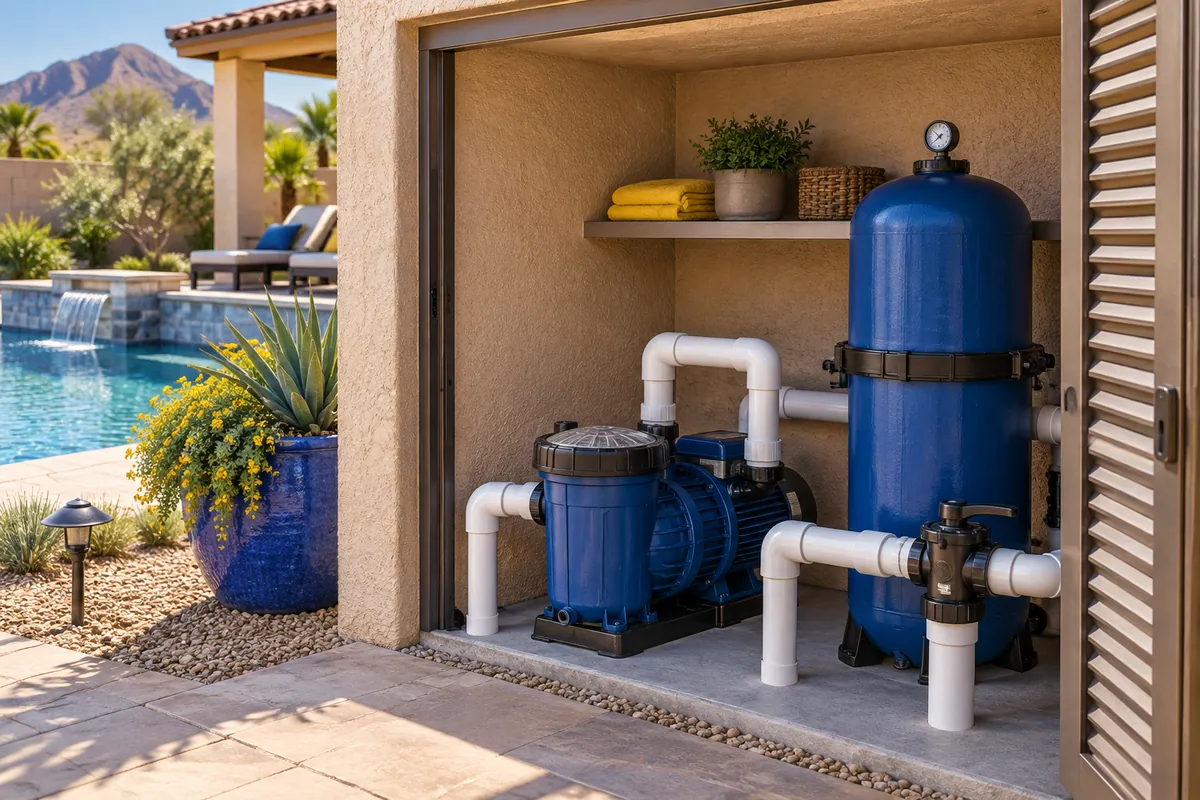
Examples are illustrative, and artwork does not depict a listed company’s actual work. Local requirements depend on your property and the authority responsible for it. Read our guide standards or suggest a correction.
Keep exploring
 Pool cleaning & maintenanceMaintenance
 Pool remodeling & resurfacingRepair & renovation
 Pool constructionInstallation
How we evaluate evidence · Suggest a correction · Record snapshot 2026-10-27