
















Maintenance & improvements · Las Vegas Valley
Cleaner Air at Home: Las Vegas Filters & Duct Cleaning
Start with the problem you want solved. Compare filtration, ventilation and targeted cleaning without treating every add-on as necessary.
In this guide
THE TAKEAWAY
Start with the source of the dust, odor or moisture. Cleaning, filtration and ventilation solve different problems; a dramatic sales demonstration is not a diagnosis.
Name the air-quality problem first
Describe the problem you want solved: visible dust, odors, a known moisture event, ventilation concerns or filter maintenance. Avoid beginning with a particular add-on device. Ask for an assessment of the likely source and the part of the home affected.
A photograph of dust alone does not establish a health hazard. If you have symptoms or health concerns, discuss them with a clinician; a contractor’s product recommendation is not a medical diagnosis.
A CLOSER LOOK
Desert dust is not a reason to buy every add-on
Tell the company when dust returns, where you see it and whether recent construction or a moisture event preceded it. The goal is to find a plausible source and a service that addresses it. An impressive photograph inside one duct does not show what every room needs.
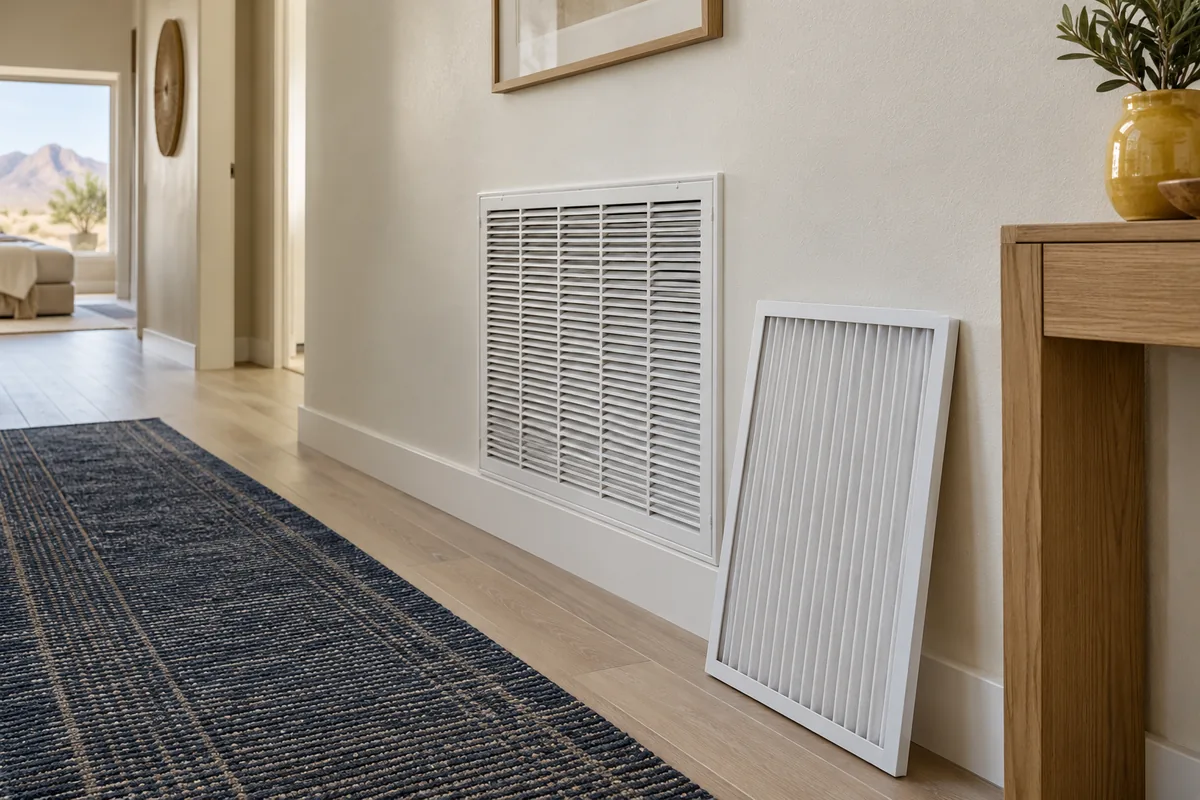
Ask how a proposed filter fits the system and who will replace it. If cleaning is recommended, request the reason, affected components and access plan before buying a package.
- Ask what problem each product is meant to solve.
- Separate moisture correction from cleaning.
- Discuss health symptoms with a clinician, not a product salesperson.
EPA does not recommend blanket routine duct cleaning and advises evaluating the particular circumstances. [1]
Compare your options
| Option | When to discuss it | What to clarify |
|---|---|---|
| Address a source or moisture problem | The concern is connected to a specific condition in the home. | Ask what evidence identifies it and which trade should correct it. |
| Improve filtration or ventilation | The system can support a defined improvement. | Request compatible filter or ventilation specifications and ongoing costs. |
| Consider targeted duct cleaning | An assessment identifies a particular reason for cleaning. | Ask for documented findings and the exact components to be cleaned. |
Match the service to the cause
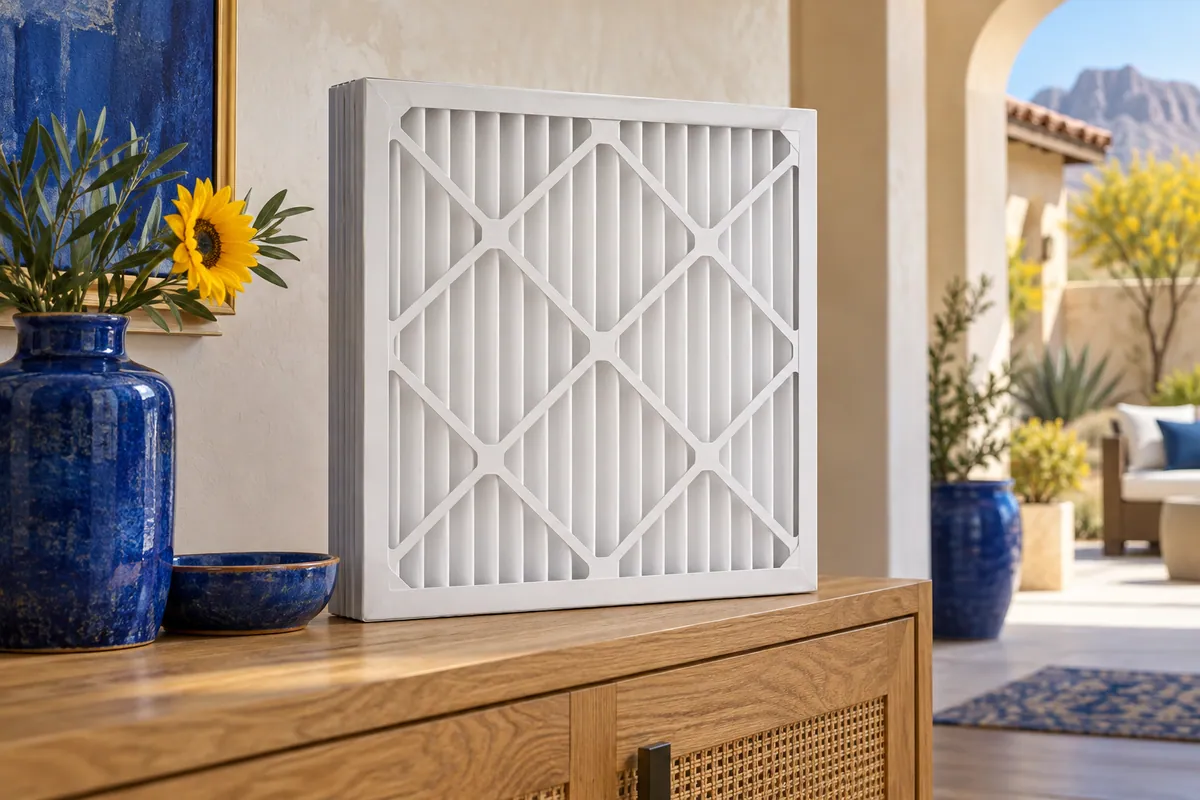
Ask the contractor to explain the goal of each proposed item and how success will be assessed. For a filter upgrade, identify the cabinet, filter size and airflow implications. For ventilation, ask where air enters and leaves and how controls operate.
For duct cleaning, require a description of affected components, access, protection of the home and any chemical products proposed. Separate repair of damaged ducts or moisture sources from cleaning; the services should not be sold as interchangeable answers.
What affects the price
Compare installation and recurring costs: replacement filters, lamps or consumables, service visits and subscriptions where relevant. Ask what maintenance preserves the product warranty. Be cautious about broad health or purification claims without evidence relevant to the actual product and use. A proposal should explain a home-specific problem and a practical response, not simply bundle every available accessory into the HVAC estimate.
Questions to ask before approving work
- What evidence supports the proposed service in this home?
- What problem does each item address?
- What are the recurring maintenance and consumable costs?
- How will we judge whether the original problem improved?
After the visit: checks, records and upkeep
Keep the product manuals and a schedule of consumables you can actually obtain. Ask the installer to demonstrate filter access and any controls, and to identify signs that warrant professional attention. Revisit the original complaint after the work.
If an odor, moisture issue or dust problem persists, request reassessment rather than assuming a larger accessory is the next step. Maintain a record of what changed and when.
Common questions
Should every home have its ducts cleaned on a schedule?
EPA does not recommend routine duct cleaning for every home. Ask whether the condition of your system creates a specific need.
Is a higher-rated filter always better?
The filter must fit the system and its airflow requirements. Ask the HVAC contractor to verify compatibility and the maintenance implications.
Find local heating & cooling companies
Compare the full company selection, then confirm the exact work and your address directly. Specific services and workmanship are not verified by broader project records.
Compare companies for air quality, filters & duct cleaningService context
EPA’s duct-cleaning guidance emphasizes evaluating the need and does not establish routine cleaning as necessary for every home. [1]
EPA’s indoor-air guidance discusses identifying sources and improving indoor conditions rather than relying on a single product. [2]
The questions and comparisons are Hey Neighbor’s homeowner guidance. Company pages describe advertised services, not an endorsement or proof of results. Equipment instructions and a property-specific assessment govern the actual work.
Sources & further reading
- U.S. Environmental Protection Agency. Should You Have the Air Ducts in Your Home Cleaned?. Accessed .
- U.S. Environmental Protection Agency. The Inside Story: A Guide to Indoor Air Quality. Accessed .
About this guide
Written and maintained by Hey Neighbor. Updated .
Editorial update: clarified the main decision, added topic-specific context and checked the reference supporting the added context.
How this guide is put together
These are AI-assisted editorial guides for homeowners, built around published sources and practical questions to ask. This update checks the added source-backed context; it is not a licensed trade professional’s technical review or an inspection of your home. Earlier references retain their individual access dates below their citations.
Examples are illustrative, and artwork does not depict a listed company’s actual work. Local requirements depend on your property and the authority responsible for it. Read our guide standards or suggest a correction.
Keep exploring
See all heating & cooling guides
How we evaluate evidence · Suggest a correction · Record snapshot 2026-10-27